Final website plan
This page outlines how we intend to structure the final SwissReach web experience: two main narrative tracks, with light interactivity and a clear progression from overview to everyday outcomes.
Two narrative tracks
- The transport network itself — where services run, and how far you can get from stations.
- How transport connects people to supermarkets — putting reachability in the context of real daily destinations.
1. Landing page
Theme
What SwissReach is, in one breath.
One-line pitch
See how Swiss public transport shapes everyday reachability — not just where lines run, but what becomes practical to reach.
Content
- A concise title and hero.
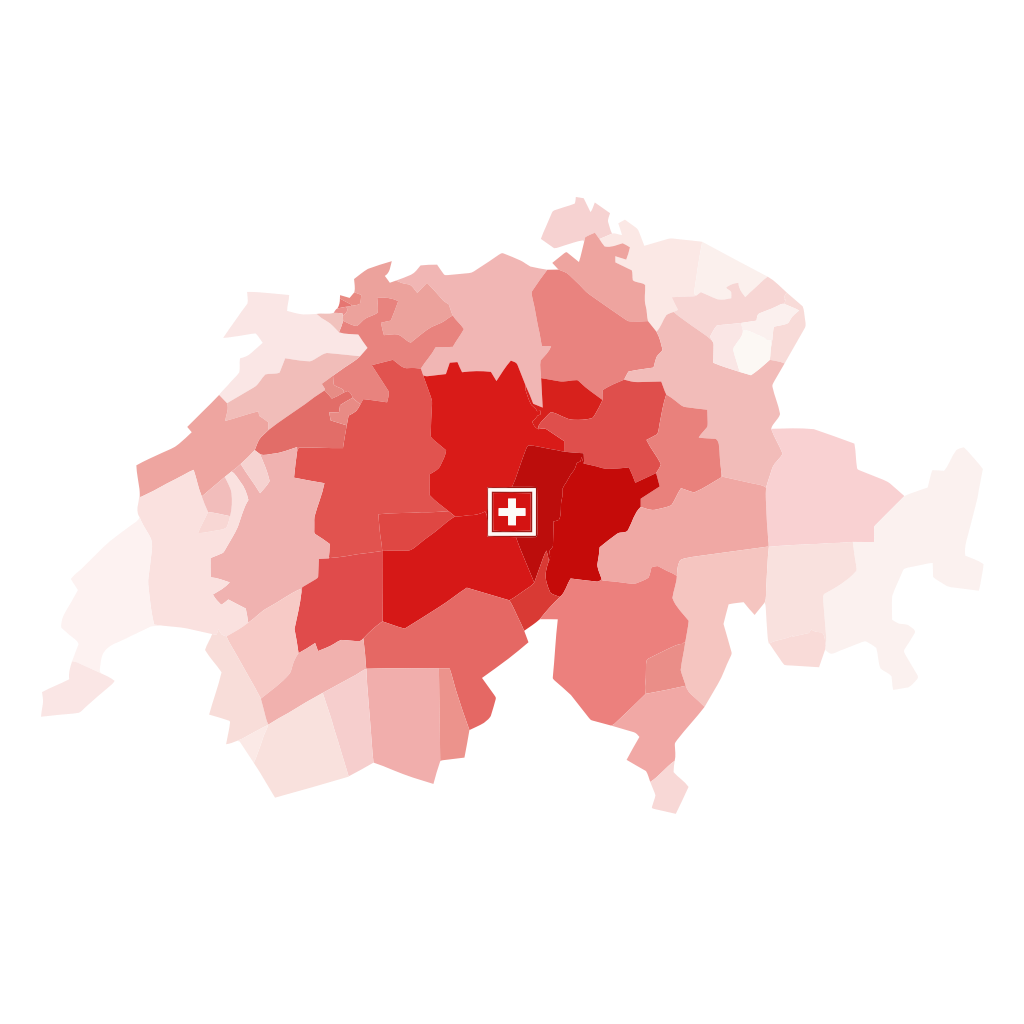
- A single pan-Swiss basemap: either all public-transport stop locations or a light reachability backdrop.
- Two short sentences of context.
Goal
Signal immediately that this is not a generic map toy: the site is about reachability and its consequences for daily life.
2. First story: Transport
2.1 Modes and spatial footprint
Content
- Switzerland: rail stations / platforms (rail-focused backbone).
- Vaud: bus stops (local, everyday mobility).
Suggested visuals
- Swiss rail stop / station map.
- Vaud bus stop map.
Light interaction
- Toggle Rail / Bus.
- Toggle Switzerland / Vaud.
Takeaway
The national story is dominated by rail as the backbone; bus is the right lens for local, day-to-day movement.
2.2 Reachability from the network
Content
- Switzerland: train + short walking transfers between nearby stops/stations.
- Vaud: bus + walking with the same transfer idea.
- Show isochrone-style reach from selected origins: how far you can get in fixed time budgets.
- Optional highlights: busiest hubs, strongest coverage, or “largest reachable footprint” examples.
Suggested visuals
- Representative station: 10 / 20 / 30 minute reachability map.
- Pan-Swiss view: ranking or coverage of how many stations each origin can reach within a window.
- Vaud: local travel-time or cumulative reach map.
Light interaction
- Time slider: 10 / 20 / 30 minutes.
- Pick a station to drill into local reachability.
Takeaway
Networks differ not only in geometry (where stops sit) but in performance (who can reach whom, and how fast). National rail and regional bus obey different logics at different scales.
3. Second story: Supermarkets
3.1 Where supermarkets are
Content
- Switzerland-wide supermarket locations.
- Canton-level brand mix; Vaud as a worked example.
Suggested visuals
- National supermarket scatter / density.
- Vaud: brand-specific footprint (e.g. Migros vs Coop vs discount chains).
Light interaction
- Select canton.
- Filter: All brands / Migros / Coop / Lidl / Aldi / Denner (and other labels as data allow).
Takeaway
Retail geography is uneven in its own right; brand strategies may show different spatial coverage patterns.
3.2 Supermarket reachability
Content
- Switzerland: from each rail station, how many supermarkets lie within 30 minutes (train + walk).
- Vaud: bus + walk reachability to supermarkets in a local window.
Suggested visuals
- National map: 30-minute supermarket access from stations.
- Vaud: bus-based supermarket reach map.
- Optional small multiples or a control for 10 / 20 / 30 minutes.
Light interaction
- Time presets: 10 / 20 / 30 minutes.
- Mode toggle: Train + walk / Bus + walk (aligned with the transport section).
Takeaway
The value of a transport network shows up when you ask “what can I actually do?” — e.g. how many food stores are realistically reachable. “Where can I get to?” often explains daily life better than “where is the stop?”.
4. Closing / synthesis page
Theme
What transport accessibility means in everyday life.
Content
- A deliberate contrast:
- Left: regions or corridors where the transport network is strong (fast, wide coverage from key hubs).
- Right: regions where supermarket reachability is strong (many stores within the same time budget).
Takeaway
A strong network on paper does not always line up with strong access to daily resources. The national rail backbone and local bus fabric play different roles in how people experience accessibility.
5. Methods (short)
Content
- Data sources (GTFS, boundaries, supermarket / POI layers).
- How reachability is computed (time-expanded graph, walking links, horizons).
- How transport layers are joined to supermarket layers for the retail story.
Suggested visual
- A simple pipeline diagram: raw data → cleaned network → reachability → linked outcomes.
Goal
Give the site intellectual closure without turning into a full technical paper.
This plan is a living roadmap; section order and exact controls may shift as prototypes land.